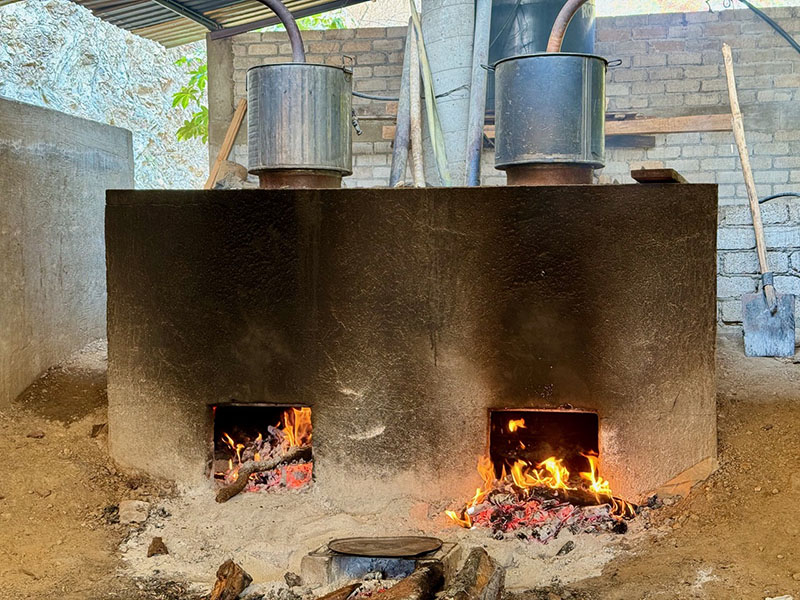
Mezcal in Puerto Escondido
COMING CLEAN. MY INTRODUCTION TO MEZCAL WAS not with mezcal at all, but rather with that substance which is maybe one-part mezcal to two parts cane sugar hooch that was given away in clubs that no longer exist on Zicatela.
My all-time worst experience was being served an ammonia cleaning solution when I asked for a mezcal at a pricey, beach restaurant (which no longer exists). That led to a quick retreat to the Casa de Salud. The restaurant bought its mezcal in 5-liter jugs which it would then pour into bottles. They also bought their detergent in 5-liter jugs. On that day, the cleaning woman had moved the jugs, and the bartender had mistakenly poured the detergent into a mezcal bottle. Fortunately, I had only taken a small sip and no harm was done. For years after that, I only drank premium tequilas when I went out.
Puerto has improved in many ways over the years, and now we have many restaurants that serve the real stuff.
Once you have tried a premium mezcal – one that is smooth and has an interesting, complex bouquet that lingers on your palate for five minutes – then your problems really begin. They are really expensive, typically close to 200 pesos a shot and 700 pesos or more a bottle
Before tasting a mezcal, you should sniff it to enjoy its aroma. Then you should take small sips, allowing the liquor to linger in your mouth to awaken your palate.
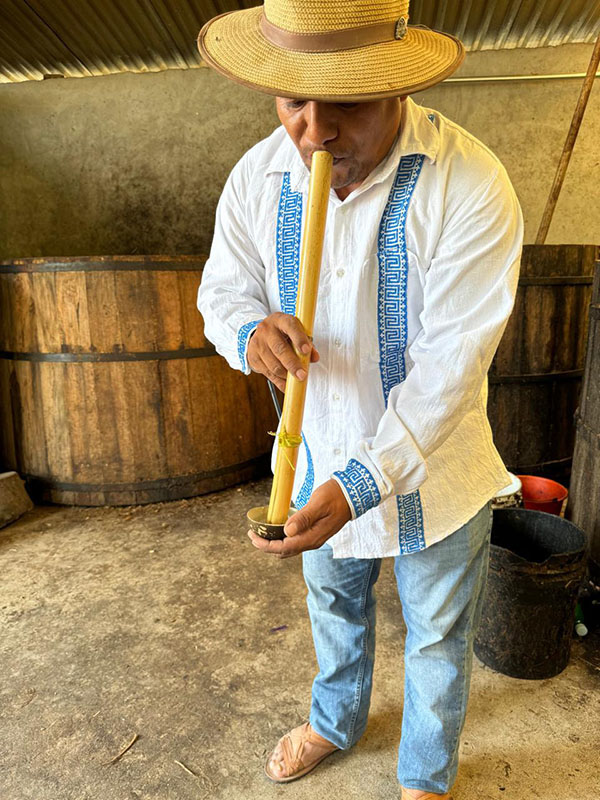
All mezcal comes from the agave cactus. There are many varieties of this plant. (Tequila comes from the blue agave.) The most popular is the espadín because it can be planted in rows and only takes eight years to mature. But the taste of the espadín varies greatly according to differences in the soil and how it is distilled. This explains the wide range in prices among this kind of mezcal.
You will notice that the espadín comes in three categories. Joven is as clear as water and has aged for 6 months. Reposado has a yellowish hue and has aged from 6 months to one year. Añejo (aged) mezcal has been in an oak vat for one to 12 years. Many prefer the joven because it best exhibits the flavors of the plant.
Alcohol content also affects the taste. Normally, mezcal is distilled twice and has an alcohol content of 40% (80 proof). However, some mezcals are distilled three times and weigh in at 55% (110 proof) or more. The higher the alcohol level, the better the taste. This is a tricky trade-off.
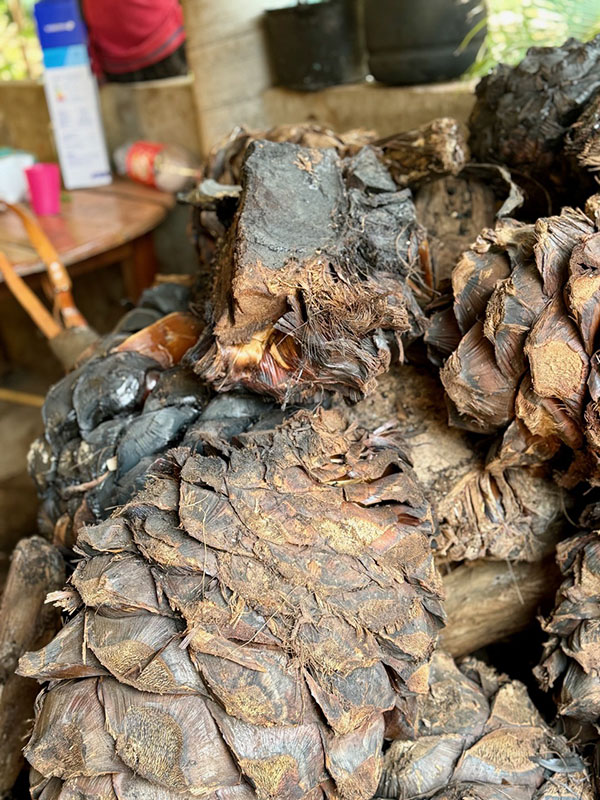
Cuixe (quee-chey) is a variety of the agave that has a more herbal taste than the espadín and is not as sweet.
Then there are varieties of agave that only grow in the wild. The best-known is the tobalá which takes 12 years to mature. These days the tobalá is also cultivated. The tepextate, mexicano, velatobe, and arroqueño take 20 to 35 years to mature. While the wild varieties are trendy now, local experts agree that they are not necessarily better than espadíns. I had one velatobe that broke my heart, its bouquet was very complex and delicious. Then I had one from another producer that was good but not fantastic. So I am very careful when it comes to recommendations.
Most mezcal from Oaxaca is labeled artisanal and each bottle has a seal certifying that it is so. Artisanal means that the mezcal comes from a particular palenque and was produced in a way agreed upon by the mezcal licensing authority. Some mezcal labels tell you the village where it was grown and the method of production, others do not. This information (or the lack of it) has nothing to do with price or quality. Basically, it’s all about marketing.
Some mezcal, especially for export, is called traditional. The term is meaningless because it can mean anything. Mezcal that is produced in large quantities (like what you would find in Chedraui) is called industrial by smaller producers.
Mezcal production has sky rocketed – along with the price – in recent years, largely because of the large demand in the U.S. and Europe. There are internet sites where people in the U.S. argue about varieties and labels that aren’t even available in Mexico.
Everyone and her cousin in Puerto know a small, artisanal palenque from whom she gets “excellent” mezcal in a 5-liter jug at much lower prices than we pay in the stores, since they are not taxed. Sometimes what you get is good, other times not so great. Bear in mind that mezcal comes in many flavors – some are fruity and others herbal. People have different preferences, just as they do with cheese and ice cream. Given my druthers, I would keep several different mezcals in my house.
A final word of caution, sniff your mezcal before you taste it. If it hurts your nose, do not drink it.
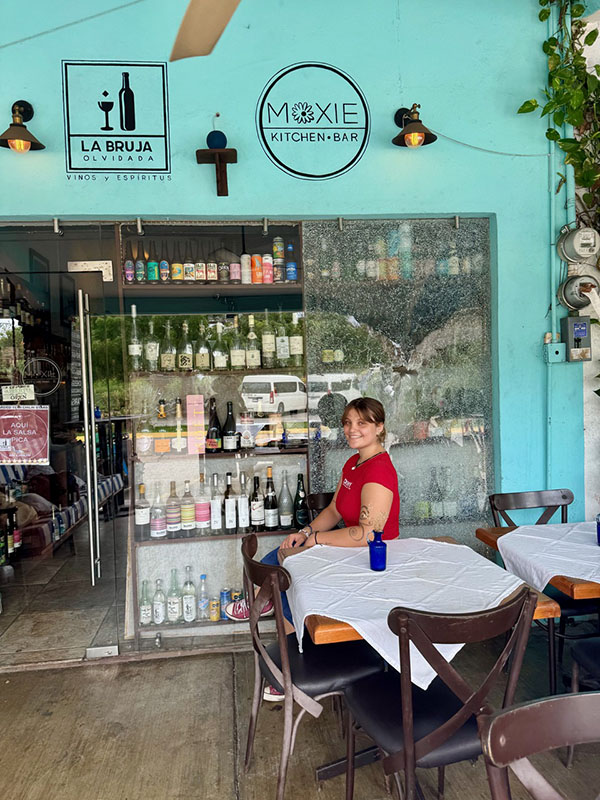
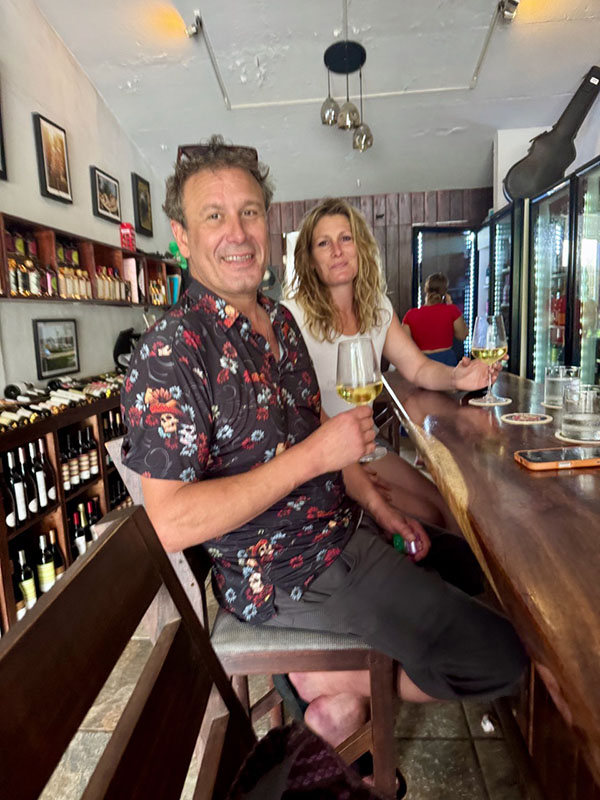
La Bruja Olvidada in the center of Rinconada is both a bar and a mezcal and wine store. You can sample the mezcal before deciding on a purchase. As of June, 2026, a liter of espadín goes for $985 pesos. Other varieties cost $1,245. Small bottles of 250 ml. cost from $400 to $750 pesos. It’s open from 11 a.m. to midnight or later, seven days a week. The vibe is friendly, and it’s a good place to make new friends from all over the world.
Metxcalli is a restaurant on the center of Rinconada which has an excellent selection of mezcals and mezcal cocktails. But it doesn’t sell it by the bottle. Open from 2 to 10 pm. Closed on Mondays.
Sha, just off the eastern entrance to the Rinconada, around the corner from Filomina, is a restaurant featuring fine Oaxacan cuisine and an exceptional variety of mescals. It’s famous for its mezcal cocktails. Unfortunately, it doesn’t sell mezcal by the bottle. Open from 3 to 10 pm. Closed Tuesdays.